


Monthly Market Update | September 2026
September 2026
Monthly Market Update
Macro Update
-
-
Markets continued to navigate a deadlock between the US and Iran over the Strait of Hormuz. Oil prices rose during the month, bringing renewed inflationary pressures and continuing the global rise in interest rates.
-
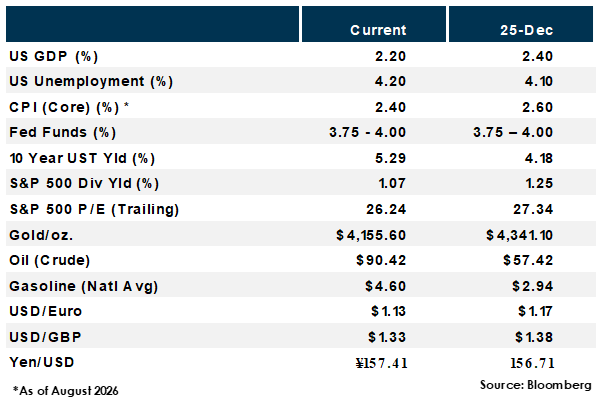
Second quarter US GDP was revised sharply higher to a 2.2% annualized rate, and resilience in economic growth has contributed to upward rate pressure.
-
The Federal Reserve voted unanimously to raise the federal funds target range by 25 basis points to 3.75%–4.00% in September, the first increase since 2023. The Committee’s projections showed a 4.1% median policy rate at year-end, implying at least one additional increase this year.
-
The labor market surprised to the upside in August as nonfarm payrolls increased by 162,000 and the unemployment rate held at 4.1%. The report was consistent with a stable labor market and gave the Fed greater scope to focus on inflation and proceed with its September rate increase.
-
Inflation pressures persisted in August as headline CPI rose 0.4% month over month and 3.4% year over year, while core CPI increased 0.3% and 2.4%, respectively. Energy prices rose 2.1% during the month and 16.3% over the year, with gasoline accounting for more than one third of the monthly headline increase.
-
Global Equity
-
-
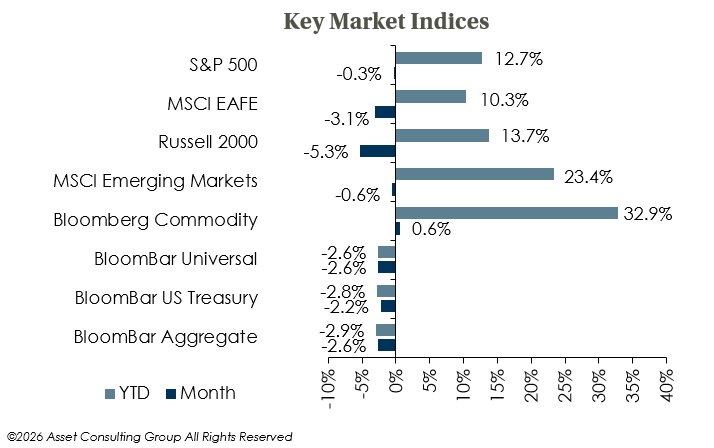
Broad equity indices were lower in September as higher bond yields, volatile oil prices, and AI safety concerns weighed on investor enthusiasm.
-
Equity earnings and the macroeconomic backdrop remain supportive, however elevated forward valuations limit further multiple expansion and increase sensitivity to earnings downgrades or weaker economic data.
-
Continued investment in AI should support earnings growth, but potential headwinds are emerging. AI model safety made headlines in September as some industry leaders came out in favor of regulations or slowing development, while a large gap remains between total AI investment and AI revenue.
-
Global Fixed Income
-
-
Treasury yields surged to multiyear highs in September as persistent inflation, a strong economy, higher oil prices, and expectations for further Fed tightening drove the 10-year yield to 5.29%. The increase tightened financial conditions and weighed on rate-sensitive equities and longer-duration bonds.
-
Sovereign yields also rose sharply as global monetary policy became more restrictive. The ECB and Bank of Japan also tightened policy in September, while the Bank of England held rates steady in a split vote but hinted at future hikes. Markets are pricing higher rates across key central banks over the next several months.
-
High-yield spreads widened by 50 bps amid heavy issuance and rate volatility, but corporate spreads remain low relative to history, supported by strong earnings. Yields near multi-decade highs reduce duration downside and improve the outlook for core bonds.
-
Global Real Estate
-
-
Core real estate returns continued the recent trend of modest appreciation and a largely income-based return in the 2nd quarter. All sectors were positive in the quarter, with senior housing and retail leading while the office sector lagged.
-
The elimination of near-term rate cut expectations represents a headwind for the sector, as higher-for-longer financing costs weigh on valuations.
-
 |
  |
Disclosures and Legal Notice | © 2026 Asset Consulting Group. All Rights Reserved.