


Monthly Market Update | October 2026
October 2026
Monthly Market Update
Macro Update
-
-
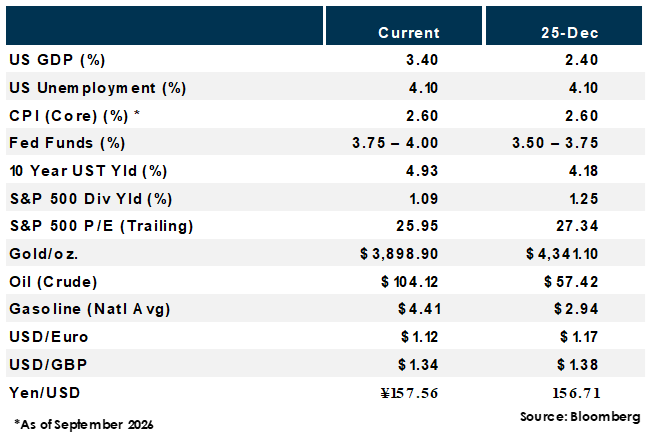
The Strait of Hormuz remained constrained in October as attacks on shipping vessels continued. Brent crude reached $117 per barrel, its highest level since April, and energy prices continued to push consumer price inflation higher.
-
Third-quarter US GDP grew at a 3.4% annualized pace, beating most forecasts and well ahead of the 2.2% pace from the second quarter.
-
The Federal Reserve voted 10-2 to hold the federal funds rate in the target range of 3.75%–4.00%. Chairman Warsh offered little in the way of forward guidance following the decision, but market pricing and the Fed’s September dot plot both point to a 25-bps hike at the December meeting.
-
Payrolls rose by 29,000 in September and the unemployment rate increased from 4.1% to 4.2%. The report was below forecast and showed unexpected softness in the labor market, but the market reacted positively as it was seen to cement expectations that the Fed would hold rates steady at the October meeting.
-
The consumer price index rose 0.6% for September, increasing the 12-month rate from 3.4% to 3.7%. Gasoline prices soared 9.1% to account for about half the gain, but price pressures were broad-based as Core CPI, which strips out food and energy, also increased from 2.4% to 2.6%.
-
Global Equity
-
-
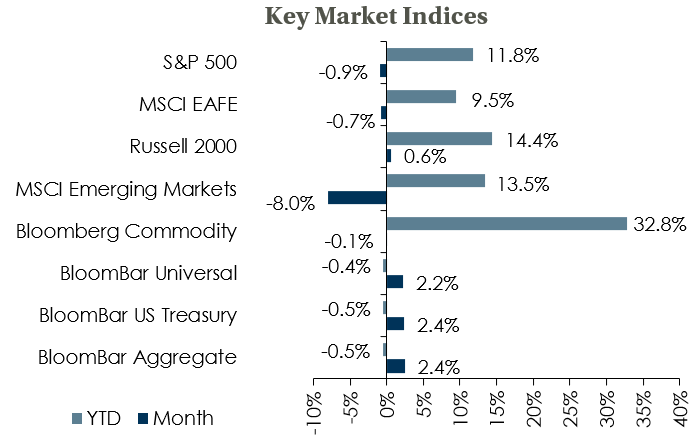
Broad equity indices were mostly lower in October as concerns around AI spending weighed on risk appetite. Market volatility rose as investors pulled back from some AI-related stocks, and emerging markets lagged as China saw its worst monthly stock market performance in a decade.
-
Earnings momentum has provided an equity tailwind even as markets weigh risks stemming from sticky inflation, higher rates, and questions around the durability of AI-related spending, but high-profile earnings misses in October weakened that support and led to a late-month downturn.
-
Overall economic activity remains solid as continued strength in consumer spending growth has helped positive earnings results broaden beyond AI-related industries.
-
Global Fixed Income
-
-
Treasury yields fell sharply in October but remain elevated relative to recent history, with the 10-year ending the month 36 bps lower at 4.93%. Bond markets benefited as a safe haven from the shift in AI sentiment, driving the 10-year down from intra-month highs above 5.3%.
-
Global monetary policy remains restrictive, as the ECB and Bank of Japan both held rates steady but have hinted at hikes later in the year. The rate decisions come as Europe's bond markets are being rattled by fiscal crisis in France, sending global aggregate bond yields to multi-decade highs.
-
Credit spreads widened from historically tight levels, with investment-grade corporates up 10 bps and high yield up 29 bps as investors grew more selective with AI-related credits. Yields near multi-decade highs reduce duration downside and improve the outlook for core bonds.
-
Global Real Estate
-
-
Core real estate posted a 9th consecutive quarter of positive returns in 3Q26, with property income supporting returns amid modest appreciation. All sectors were positive in the quarter, but the Office sector continues to be a laggard and was the only property type to see a decline in value.
-
The expectation of additional Federal Reserve policy tightening represents a headwind for the sector, as higher-for-longer financing costs weigh on valuations.
-
 |
  |
Disclosures and Legal Notice | © 2026 Asset Consulting Group. All Rights Reserved.