


Monthly Market Update | August 2026
August 2026
Monthly Market Update
Macro Update
-
-
Geopolitical risks remained elevated as strikes between the US and Iran resumed with no signs of meaningful negotiations. US-Canada trade tensions also flared up again, with Canada announcing retaliatory tariffs after President Trump's new 50% tariffs on $20 billion of Canadian imports took effect in late August.
-
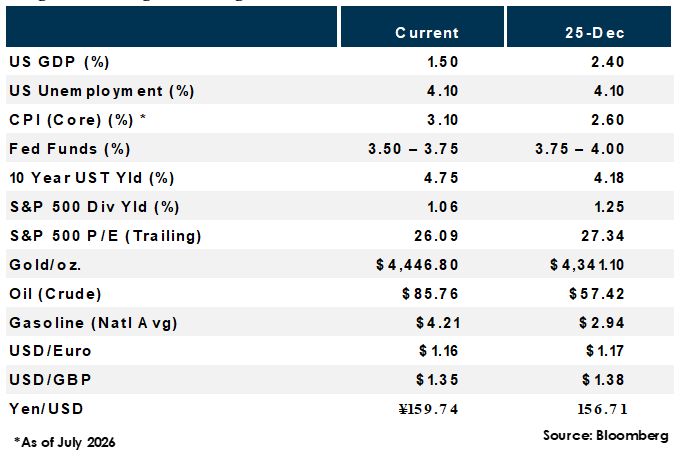
The second estimate of Q2 US GDP was unchanged at a 1.5% rate, with solid consumer spending growth offset by volatility in imports and inventory growth.
-
In his first policy speech as Federal Reserve Chair, Kevin Warsh made hawkish comments reaffirming his commitment to fighting inflation, leaving a September rate hike in play. He nevertheless described the economy as strong and reiterated his preference for a “quieter” Fed with less forward guidance.
-
The US economy shed 23,000 jobs in July, while May and June payrolls were revised down by a combined 103,000. The unemployment rate edged lower to 4.1%, but the decline reflected a smaller labor force, reinforcing evidence that hiring momentum is weakening.
-
Consumer inflation eased slightly in July, with the CPI report released in August showing headline inflation at 3.4% year over year and core inflation of 2.5%. Disinflation provided some relief, but energy prices, tariffs, and sticky services inflation keep the Fed focused on price stability.
-
Global Equity
-
-
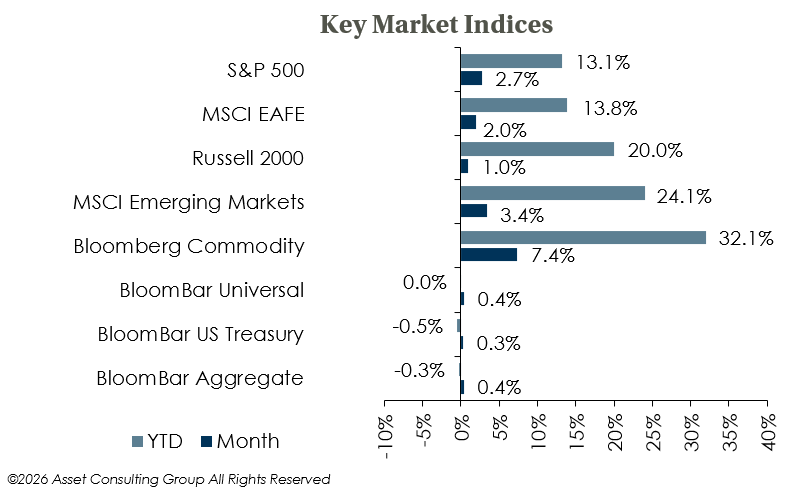
Equities were resilient in August, repeatedly recovering from concerns about the Iran conflict, rising bond yields, weaker labor data, and inflation risks.
-
Solid economic data and healthy corporate earnings supported the broader market, and a positive outlook from Nvidia in late-August suggested the AI investment wave continues to have momentum.
-
AI remains a central market theme amid the continued boom in capex and earnings, but the market is increasingly sensitive to whether hyperscaler spending can translate into durable revenue growth.
-
Global Fixed Income
-
-
Treasury yields remained elevated in August as investors weighed sticky inflation, heavy sovereign issuance, fiscal concerns, and the Fed’s hawkish internal debate against a weaker jobs report.
-
Major global central banks largely held rates steady in August while maintaining a hawkish bias. September meetings could see more movement, with the ECB viewed as most likely to raise rates, the Bank of England expected to remain steady, and the Bank of Japan seen as a close call for another hike.
-
Credit spreads remained relatively contained despite geopolitical risk, supported by strong corporate earnings and resilient investor demand. With the long end exposed to inflation, fiscal, and supply risks, absolute-return strategies continue to offer an appealing alternative to duration-heavy portfolios.
-
Global Real Estate
-
-
Core real estate returns continued the recent trend of modest appreciation and a largely income-based return in the 2nd quarter. All sectors were positive in the quarter, with senior housing and retail leading while the office sector lagged.
-
The elimination of near-term rate cut expectations represents a headwind for the sector, as higher-for-longer financing costs weigh on valuations.
-
 |
  |
Disclosures and Legal Notice | © 2026 Asset Consulting Group. All Rights Reserved.